
Arbitrum Review

  • 🟣 Ethereum Layer-2 scaling (rollups)
  • ⬆️ Optimistic rollup with Ethereum settlement
  • 🚀 Launch year: 2021
Go to the website

Advantages and disadvantages

Pros

  • High EVM compatibility
  • Lower transaction costs
  • Strong developer tooling
  • Staged decentralization plan

Cons

  • Sequencer centralization risks
  • Dependence on Ethereum security
  • Complex product family
  • Some dApp-level vulnerability exposure

Overview

Arbitrum review art

Arbitrum is a leading Ethereum Layer-2 scaling suite designed to increase throughput and reduce transaction costs while leveraging Ethereum for final settlement.

Built by Offchain Labs and transitioned toward a community-led foundation and DAO, Arbitrum supports a range of execution environments and product variants tailored to different use cases. It stands out for its pragmatic blend of EVM-compatibility, developer tooling, and a staged decentralization roadmap that shifts responsibility from a central sequencer operator to broader governance.

Official video

Arbitrum

Arbitrum's latest upgrade explained #arbitrum #blockchaintechnology #layer2
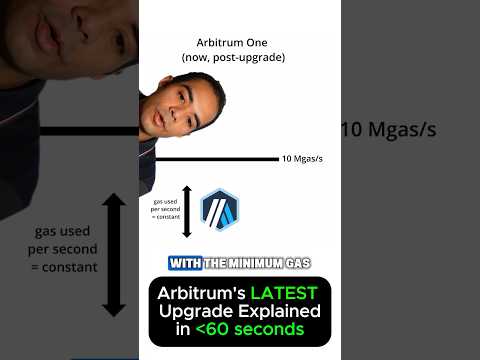
Arbitrum's latest upgrade explained #arbitrum #blockchaintechnology #layer2

Official explainer from Arbitrum

Overview

Arbitrum is a family of Layer-2 scaling solutions that aims to make Ethereum more usable for high-throughput decentralized applications without sacrificing security.

Originally developed by Offchain Labs, the project has evolved from a single optimistic rollup into a product suite: a general-purpose EVM-compatible rollup, a high-throughput ‘AnyTrust’ chain for social/low-value interactions, and developer tooling for custom Layer-3 chains.

Arbitrum emphasizes EVM compatibility to reduce migration friction for existing Ethereum smart contracts and prioritizes pragmatic upgrades that maximize throughput while minimizing changes for developers.

The Arbitrum ecosystem hosts decentralized exchanges, lending platforms, NFT marketplaces, and infrastructure projects. Its technical direction has been iterative: initial mainnet beta releases focused on correctness and compatibility, followed by major protocol engineering upgrades that changed execution engines, calldata handling, and node performance.

Governance transitioned toward a DAO model with a governance token to align incentives between users, builders, and the original development organization.

Project history and timeline

Key milestones in Arbitrum’s development trace a clear path from research to scaling production:

1
2021
Mainnet beta and initial Arbitrum One deployment; early adoption by DeFi protocols and developer experimentation.
2
2022
Release of a major upgrade to the execution stack that increased throughput and optimized calldata handling, supporting larger capacity and lower fees for common transactions.
3
2022
Introduction of a separate high-throughput network targeted at high-volume, lower-security use cases.
4
2023
Introduction of a governance token and formal DAO process to accelerate sequencer decentralization and give users a direct voice in protocol direction.
5
2023–2024
Continued roadmap expansion with Layer-3 tooling for builders, sequencer decentralization steps, and ecosystem incentives to increase protocol composability.

Technical characteristics

Characteristic Detail
Launch year 2021 (mainnet beta)
Consensus / Settlement Optimistic rollup; security anchored to Ethereum
Architecture EVM-compatible rollup family (One, Nova, Nitro upgrades, Orbit toolkit)
Primary developer Offchain Labs (later Arbitrum Foundation / DAO)
Native token ARB (governance token)
Total supply Fixed nominal supply set at token launch
Main use cases DeFi, NFTs, high-volume apps, Layer-3 deployments
Sequencer model Initially centralized operator with staged decentralization roadmap

Expert Review

Arbitrum has emerged as one of the most consequential Layer-2 strategies for Ethereum scaling due to its developer-first approach and pragmatic EVM compatibility. Technically, it leverages optimistic rollup mechanics and iteratively upgrades execution layers to compress calldata and increase throughput.

The product family—spanning a main general-purpose rollup, a high-throughput chain for social or low-value interactions, and a Layer-3 toolkit—gives the ecosystem a flexible toolbox that serves multiple developer and user needs.

Adoption has been moderate to strong since launch: builders favor Arbitrum for its low-friction porting of Ethereum smart contracts and for the breadth of tooling available. The introduction of a governance token and the move toward DAO-led decision-making marked a major governance inflection point, aligning long-term incentives between the protocol and its users.

That said, the platform’s history highlights important trade-offs: sequencer centralization created short-term operational efficiency at the cost of user concerns about control and censorship resistance, and the airdrop distribution cycle revealed how protocol announcements can trigger social-engineering attacks that prey on otherwise careful users.

From an investment and long-term outlook perspective, Arbitrum’s strengths lie in its ecosystem effects, compatibility, and ongoing decentralization efforts. Risks include the pace and success of sequencer decentralization, the security posture of third-party dApps, and the broader competitive dynamics among optimistic and zero-knowledge rollups.

Technologically literate investors and builders should weigh Arbitrum’s operational maturity, community governance trajectory, and product differentiation when assessing its role in multi-chain strategies. Practically, Arbitrum is best viewed as a robust, evolving scaling layer: attractive for developers seeking EVM compatibility and users looking for lower-fee alternatives to mainnet, but not a substitute for careful contract auditing and safe user practices in a rapidly changing ecosystem.

Security

Security and Incidents

Arbitrum’s security model is derived from optimistic rollup principles: transactions are executed off-chain on the rollup and batch data (or calldata commitments) are posted to Ethereum for final settlement.

Fraud-proofs and challenge windows form the theoretical mechanism that validates state transitions. In practice Arbitrum has combined this cryptoeconomic model with operational controls, including a sequencer role that orders and publishes transactions.

Audits and transparency: major protocol upgrades were open-sourced and underwent community review and third-party security assessments during the development cycle.

The project has published technical specifications and migration details for significant upgrades to facilitate independent review. The staged decentralization program moved governance authority to a DAO and introduced a security council as part of a transitional governance approach.

Known incidents: Arbitrum has not experienced a catastrophic protocol-level exploit that led to systemic loss of funds at the rollup core, according to public reporting during the major upgrade and governance events. However, the ecosystem around Arbitrum has been targeted in several ways:

1
2023
Phishing and airdrop scams: the public distribution of the governance token generated a wave of phishing sites and fake claim portals. Many users were targeted by fraudulent websites offering token claims, and the community documented hundreds of malicious domains during the airdrop period. The team and community issued warnings and the majority of protocol-related losses reported in that window were due to social-engineering attacks, not a protocol exploit.
2
2022–2024
dApp-level exploits: several third-party applications and smart contracts deployed on Arbitrum have suffered security incidents common to DeFi ecosystems. These events typically affected individual projects, were executed against application code (not the Arbitrum settlement layer), and were handled through standard incident response measures such as multisig freezes, forensic analysis, and, in some cases, coordinated recovery or compensation efforts.
3
Ongoing
Operational risks and sequencer concerns: the sequencer model created periods of centralized control that were discussed extensively in the community. The project responded with a multi-stage decentralization roadmap and governance mechanisms intended to reduce single-operator risk over time.

Outcome and project response: the Arbitrum team and later the Arbitrum Foundation emphasized user education, audit transparency, and a staged governance model to mitigate similar incidents.

They prioritized hardening developer tooling, releasing auditables for major upgrades, and establishing governance processes to enable future protocol-level decisions via community votes.

Consensus safety
Anchored to Ethereum, inherits mainnet finality for settlement; optimistic model requires dispute/rollup mechanisms.
Audit transparency
Major releases were publicly announced with accompanying technical notes and community review cycles.
Known incidents
Airdrop phishing (2023) and isolated dApp exploits; no widely reported protocol-level theft affecting the rollup settlement.

Fees

Fees and Transactions

Arbitrum reduces per-transaction costs relative to Ethereum mainnet by batching transactions and compressing calldata before posting to layer 1. Fees are collected for execution, calldata publication, and optional priority ordering; in practice users pay lower nominal fees for most common operations but should expect fee variability during congestion.

Arbitrum One targets DeFi-grade security and moderate fees, while specialized networks prioritize throughput and lower per-interaction cost at the expense of a different trust model. Transaction finality depends on both the rollup’s settlement cadence and the challenge window for fraud proofs; as such, final confirmation for dispute-free transfers ultimately aligns with Ethereum’s block finality.

Network Fee level Speed / UX
Arbitrum One (general) Low to moderate Fast confirmations, Ethereum-settled finality
Arbitrum Nova (high-volume) Minimal for social/low-value ops Very fast UX, different trust assumptions
Ethereum Mainnet (for reference) High Slower and more expensive for small txs

FAQ

Arbitrum is a set of Ethereum Layer-2 scaling solutions that execute transactions off-chain and post commitments to Ethereum for settlement. It primarily uses an optimistic rollup model—transactions are considered valid by default and can be contested via fraud-proof mechanisms.

By batching many transactions and compressing calldata, Arbitrum reduces per-transaction fees while remaining compatible with existing Ethereum smart contracts.

Arbitrum began with development led by Offchain Labs and a centralized sequencer operator to manage ordering. Over time the project transitioned governance to a foundation and DAO structure and published a staged decentralization roadmap.

While elements of the system are moving toward broader control by token holders and a decentralization committee, operational components like sequencers have historically been centralized and are being gradually decentralized via governance and technical changes.

Users can interact with Arbitrum through wallets that support Ethereum Layer-2 networks by connecting to Arbitrum-enabled dApps, swapping tokens on decentralized exchanges, minting or trading NFTs, or bridging assets from Ethereum mainnet.

Developers can deploy existing EVM-compatible smart contracts with minimal modifications. Wallet and bridge choices impact UX and security, so users should follow best practices like verifying official sites and avoiding unsolicited airdrop claim portals.

Arbitrum's native governance token was designed for protocol governance rather than mandatory fee settlement; network fees are typically paid in the underlying settlement asset (ETH) rather than the governance token.

Staking models and fee-sharing mechanisms depend on specific protocol proposals and community governance decisions. Users should consult governance updates and on-chain proposals for any approved fee-sharing or staking programs.

Primary risks include smart-contract vulnerabilities in third-party dApps, social-engineering attacks (phishing, fake airdrop sites), the transitional centralization of sequencers during decentralization steps, and the dependency on Ethereum for final settlement.

While the rollup inherits Ethereum's security for settlement, operational models and application code remain important attack surfaces.

Other reviews in this category

Aave Review

Chainlink (LINK) Review

Ethereum (ETH) Overview

Uniswap (UNI) Review